Commercial door & locksmith service · Washington DC, nearby Northern Virginia and nearby Maryland · Call 703-244-0559

Commercial door & locksmith service

Repair and deficiency correction

Commercial Fire Door Repair in Washington DC

Commercial fire-door repair for openings with closing, latching, alignment or hardware problems.

Serving Washington DC, with nearby Northern Virginia and Maryland requests reviewed by service location.

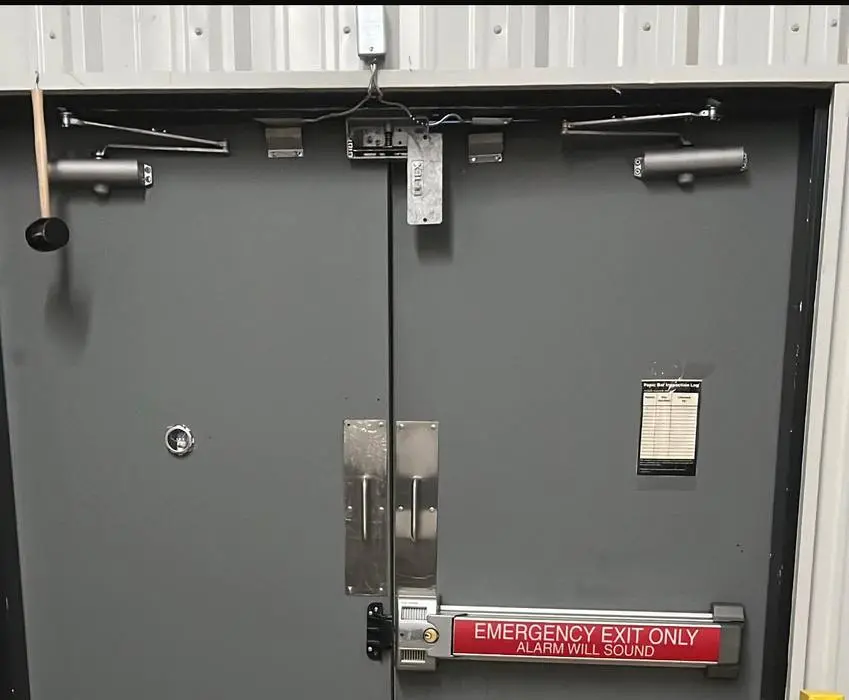
Pair of commercial fire doors with closing and latching hardware
Commercial fire door assembly shown; the image location is not published.

Start with the problem

Correct the opening, not just the visible symptom

A fire-rated opening is a coordinated assembly. A door that will not latch may have a closer issue, hinge wear, frame movement, strike alignment, binding or damaged hardware. Replacing the first visible part without diagnosing the opening can leave the same deficiency in place.

Send the known deficiency language, opening location, door count and photos when available. The request can then be routed as an urgent security/egress problem or a scheduled correction project.

Door does not self-close
Latch does not engage
Closer leaks, slams or stalls
Leaves or frame are misaligned
Hinges, fasteners or hardware are loose
An inspection listed a hardware deficiency
Door or frame has visible damage
Unapproved alteration needs evaluation

Diagnosis and scope

Common correction categories

The correct repair depends on the rated assembly, labels, existing preparation and approved hardware. Some conditions can be adjusted; others need compatible replacement components or a larger door-and-frame scope.

Key points

  • Closer adjustment or compatible replacement assessment
  • Strike, latch and coordinator alignment
  • Hinge, pivot and fastener correction
  • Door/frame alignment and clearance diagnosis
  • Exit or fire-exit hardware repair assessment
  • Damage or field-modification review before work is authorized

Commercial decision support

Use the prior report when one exists

A deficiency report can reduce ambiguity, but it is not a substitute for field verification. Include the item number and exact wording, then identify whether the quote should cover only listed openings or any related conditions found during the visit.

If there is no report, describe the observed behavior: whether the door closes from a few inches, whether the latch projects, whether the leaves sequence correctly and whether anything rubs or obstructs the swing.

Key points

  • Have the exact deficiency wording ready
  • Identify each opening consistently
  • State whether parts, labor and follow-up should be separate
  • Confirm who can approve additional work onsite

Service details

Repair versus replacement

Adjustment is appropriate only when components are serviceable and the result can be achieved within the approved scope. Damaged, leaking, incompatible or heavily worn components may require replacement. Door or frame damage can move the project beyond a hardware-only repair.

No repair should be described as compliant or approved until the applicable requirements and finished condition have been evaluated by the responsible parties.

Key points

  • Repair when serviceable hardware can be restored
  • Replace when a component is failed, damaged or incompatible
  • Escalate when door/frame condition drives the failure
  • Confirm reinspection or sign-off responsibility separately

What happens next

How a commercial service request moves forward

Call with the service location and opening details. The request is reviewed and the available next step is confirmed directly.

  1. Share the deficiency or symptom

    Provide the report item, door identifier, photos and the current closing/latching behavior.

  2. Diagnose the full opening

    Review door, frame, hinges, closer, latch, strike and related hardware before selecting a correction.

  3. Approve the repair scope

    Separate adjustment, replacement and larger assembly work so the property can authorize the right level.

  4. Confirm finished operation

    Operate the opening after work and document only the deliverables included in the approved scope.

Commercial property types

Built for facility and business needs

  • Offices
  • Schools
  • Medical facilities
  • Warehouses
  • Restaurants and retail
  • Commercially managed multifamily common areas

Commercial door, lock and hardware service for businesses and managed properties.

Request service

Review the project details we will ask for

The disabled form shows the building, opening-count and project details to prepare before calling.

Call to Discuss the Project 703-244-0559

Online form unavailable. Online requests are currently unavailable. Call to discuss commercial service.

Planned commercial project details

Commercial door, lock and hardware service for businesses and managed properties.

The form is shown for reference but cannot be completed or sent. Call to discuss scope and availability. See the privacy policy.

Online submissions are disabled.

Commercial FAQ

Questions about this commercial service

Can a fire door that will not latch be adjusted?

Sometimes. The cause may be closer force, hinge wear, binding, strike position, latch condition or frame alignment. Diagnosis determines whether adjustment is appropriate.

Do you repair deficiencies from an inspection report?

Call with the listed items or exact deficiency wording. Correction availability, documentation and follow-up scope must be confirmed in the estimate.

Is a fire door repair the same as an inspection?

No. Repair changes or restores components; inspection observes and documents conditions under an agreed checklist. They should be scoped separately.

What should I do if the opening will not secure now?

Call and identify it as an active commercial security or egress problem. Explain whether the opening can close, latch and be safely monitored until service.

Is the commercial opening unsafe or unsecured?

Commercial door, lock and hardware repair service for businesses and managed properties.