Key points
- Check for fluid loss and body damage
- Inspect arm attachment and geometry
- Observe sweep, latch and backcheck behavior
- Compare door movement before changing settings
Commercial door & locksmith service
Leaks, slamming and latching problems
Commercial door closer diagnosis for businesses, facilities and managed properties with leaks, slamming or latching problems.
Serving Washington DC, with nearby Northern Virginia and Maryland requests reviewed by service location.
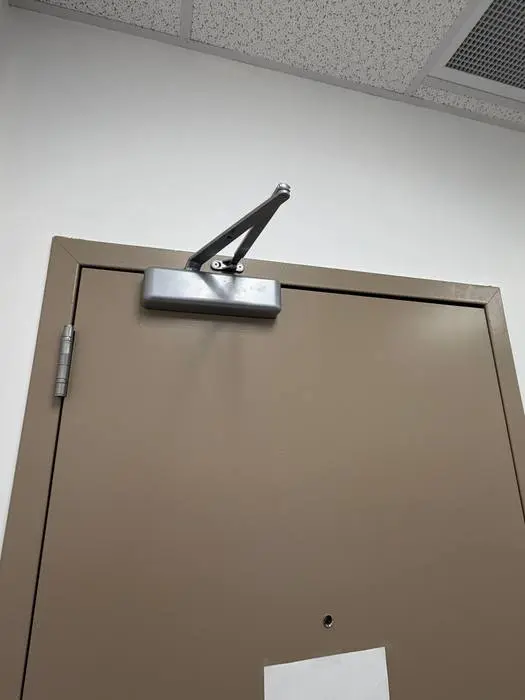
Start with the problem
A closer controls motion, but it cannot reliably overcome a dragging door, worn hinge, shifted frame or misaligned latch. Diagnosis should separate closer faults from conditions that make the closer appear defective.
Commercial closer service considers the door, frame, hinges, latch and daily operating conditions so the repair addresses the full opening.
Diagnosis and scope
Sweep, latch and backcheck behavior may be adjustable when the closer is intact and correctly sized for the opening. Visible leakage, damaged castings or loss of hydraulic control often point toward replacement rather than repeated adjustment.
Commercial decision support
A closer may bring the door nearly shut while the latch misses the strike or the door binds at the frame. The repair plan should account for alignment and hardware resistance before increasing closing force.
Service details
When a labeled fire door does not self-close and latch, the property team should identify the opening and share any inspection findings. The closer, latch, hinges and clearances must be considered together, and no repair should be represented as a guaranteed inspection result.
What happens next
Call with the service location and opening details. The request is reviewed and the available next step is confirmed directly.
Describe whether the door leaks, slams, stalls, stays open or reaches the frame without latching.
The closer, arm, hinges or pivots, frame, latch and strike are observed through a full operating cycle.
The condition of the closer and the rest of the opening determines whether adjustment, related repair or replacement is appropriate.
After approved work, the door is opened from several positions and checked for controlled closing and reliable latching.
Commercial property types
Commercial door, lock and hardware service for businesses and managed properties.
Request service
For an active security or egress issue, call and describe the condition. The disabled form shows the details and door photo that may help scope the conversation.
Call for Commercial Emergency Dispatch 703-244-0559Commercial FAQ
Adjustment does not restore lost hydraulic fluid or repair a damaged seal. A leaking closer should be assessed for replacement and for any door condition that contributed to the failure.
The latch phase may be too weak, but alignment, hinge wear, strike position, seals or exit hardware can also prevent latching. The whole opening should be checked.
No. Adjustment may help an intact closer, while internal failure, leakage, incorrect application or arm damage may require replacement or related door repair.
Adjustment may help when the closer is serviceable and the door, hinges and latch are aligned. Leaking fluid, damaged components or a closer that no longer controls the opening may require replacement assessment.
Commercial door, lock and hardware repair service for businesses and managed properties.