Key points
- Rim latch and strike engagement
- Mortise lock case and door-edge alignment
- Surface vertical rod adjustment
- Concealed rod movement and latch points
Commercial door & locksmith service
Rim, mortise and vertical rod device service
Commercial exit-device diagnosis for rim, mortise and vertical-rod hardware at businesses and managed facilities.
Serving Washington DC, with nearby Northern Virginia and Maryland requests reviewed by service location.
Start with the problem
Rim, mortise and vertical rod devices can produce similar symptoms for very different reasons. Identifying the configuration and testing every latch point prevents a one-size-fits-all repair.
Service covers commercial exit doors at businesses and managed properties, with diagnosis based on the installed device configuration and complete opening.
Diagnosis and scope
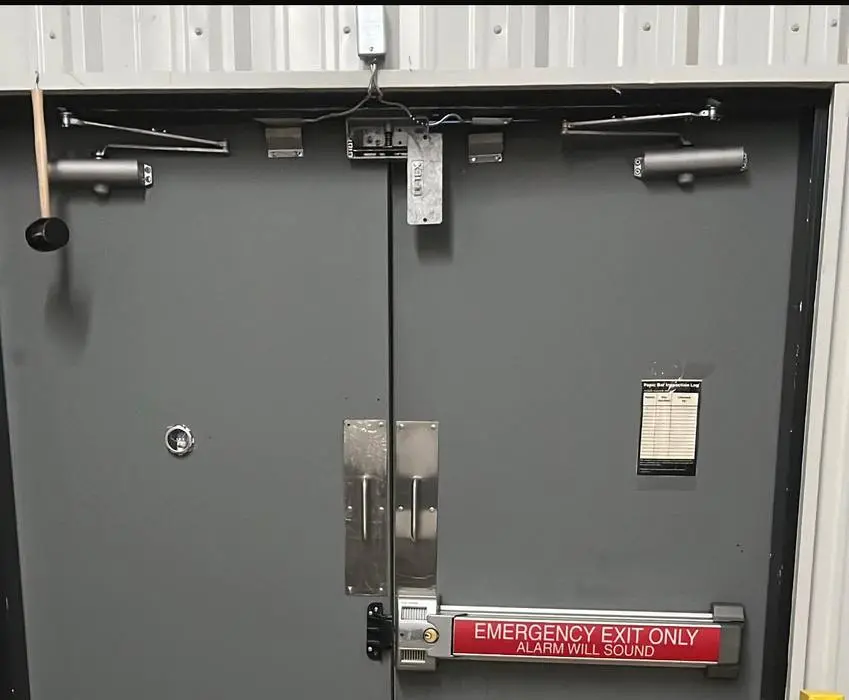
A rim device latches at the surface of the frame, a mortise device operates a lock case within the door, and a rod device secures at the top, bottom or both. Diagnosis follows the actual latch path and the door preparation.
Commercial decision support
Door sag, warped frames, damaged pivots, closer pressure and meeting-stile alignment can prevent an otherwise functional device from releasing or relatching. Those conditions should be documented before parts are replaced.
Service details
Some faults can be corrected through alignment, secure attachment or serviceable component replacement. Extensive wear, damaged housings, unavailable components or unsuitable door preparation may support a complete replacement recommendation.
What happens next
Call with the service location and opening details. The request is reviewed and the available next step is confirmed directly.
Photos of the full door, device, latch points and exterior trim help define the initial service request.
The device is operated from inside and, where applicable, through the authorized exterior trim or access function.
Device faults, alignment problems and related door conditions are separated into a clear recommended scope.
After approved work, the door is cycled repeatedly to observe release, closing and relatching.
Commercial property types
Commercial door, lock and hardware service for businesses and managed properties.
Request service
For an active security or egress issue, call and describe the condition. The disabled form shows the details and door photo that may help scope the conversation.
Call for Commercial Emergency Dispatch 703-244-0559Commercial FAQ
Exit device is the broader hardware category. Panic hardware is a type of exit device intended for particular occupancy and egress applications. The existing opening should be identified before work is scoped.
Many rod, latch and alignment problems can be serviced, but concealed components, door damage or unavailable parts may change the practical repair path.
The mechanical opening and visible electrified functions can be assessed. The final scope depends on the device, power path, access-control setup and any work requiring another qualified trade.
Photos of the push side, pull side, door edge, top and bottom latch points, and any visible model markings can help distinguish rim, mortise and vertical-rod hardware before the site assessment.
Commercial door, lock and hardware repair service for businesses and managed properties.